
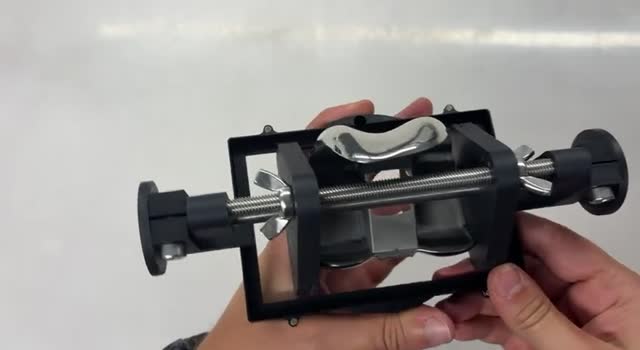
TRL 3
Knee Implant Scanning Jig
Quick experiments show the key part of the idea can actually work.
View project →Technology Readiness Levels (TRLs) and Manufacturing Readiness Levels (MRLs) are a shared language for how proven a technology is, and how ready the product is to be launched. Funders such as Innovate UK, investors and engineers all use them. Here’s what they mean in simple terms.
01 / Technology Readiness Levels
The TRL scale was created by NASA and is now used by the European Commission, UK funders and industry worldwide. It runs from 1, where only the basic science is understood, to 9, where the product is ready to be sold on the market. Each level is a milestone backed by evidence. We can help you capture that evidence.
Diamond PD specialises in the early, fast-moving stages: rapid, in-house development that takes an idea from proof of concept to a robust working prototype. As your product matures, we can keep supporting the later stages too.
| Level | Official name | In plain English | What you’d typically have |
|---|---|---|---|
| TRL 1 | Basic principles observed | The science behind the idea is understood. | Research papers, an idea, a problem to solve. |
| TRL 2 | Technology concept formulated | A practical use for that science is proposed. | Sketches, early concepts, desk research. |
| TRL 3 | Experimental proof of concept | Quick experiments show the key part of the idea can actually work. | Bench tests, rough 3D prints, breadboard electronics. |
| TRL 4 | Technology validated in the lab | The main parts are built and work together on the bench. | A working lab prototype. |
| TRL 5 | Validated in a relevant environment | It's tested in conditions close to real use. | A more robust prototype tested outside the lab. |
| TRL 6 | Demonstrated in a relevant environment | A near-final prototype is demonstrated working in realistic conditions. | A pilot-ready prototype — often what investors want to see. |
| TRL 7 | Prototype demonstrated in operational environment | A full prototype is proven in real-world use. | Field trials, pilot studies, user trials. |
| TRL 8 | System complete and qualified | The final design is finished, tested and approved. | A production-ready design, with certification where needed. |
| TRL 9 | Proven in operational environment | The product is on the market and working. | Commercial launch and sales. |
02 / Manufacturing Readiness Levels
A product can work perfectly as a prototype and still be hard, slow or expensive to make. The MRL scale, developed by the US Department of Defense, tracks that second question: from early thoughts on manufacturing (1) to efficient full-volume production (10).
TRLs and MRLs rise together. Because we design and manufacture in-house, we consider how things will be made from day one (our Design for Excellence approach), so MRL keeps pace with TRL instead of becoming a costly redesign later.
| Level | Official name | In plain English |
|---|---|---|
| MRL 1 | Basic manufacturing implications identified | Early thinking about whether it could ever be made. |
| MRL 2 | Manufacturing concepts identified | Possible materials and processes are considered. |
| MRL 3 | Manufacturing proof of concept | Key parts can be made, at least as one-offs. |
| MRL 4 | Can be made in a lab environment | The prototype can be built in a workshop or lab. |
| MRL 5 | Prototype components in a production-relevant environment | Parts are made using processes close to real production. |
| MRL 6 | Prototype system in a production-relevant environment | The whole prototype is built using production-like methods. |
| MRL 7 | Systems in a production-representative environment | Made the way it will be produced, ready to plan a pilot run. |
| MRL 8 | Pilot line demonstrated | A small batch has been made; ready for low-volume production. |
| MRL 9 | Low-rate production demonstrated | Low-volume production is running; full-scale production is being prepared. |
| MRL 10 | Full-rate production demonstrated | Made at full volume, efficiently and consistently. |
03 / Why it matters
Grant competitions, including many from Innovate UK, are open only to projects within a set TRL range. Knowing your level tells you which ones you can apply for.
Investors use TRLs to judge risk. Moving from a bench prototype (TRL 4) to one proven in realistic conditions (TRL 6) is often what unlocks the next round.
Your current TRL and MRL show what needs to happen next — and help us scope a project that moves you up the scale efficiently.
04 / Examples
A few of our projects, from earliest to most developed. Exhibition models and props aren’t working technology, so they sit outside the TRL scale and are labelled “Model” instead.
TRL 3
Quick experiments show the key part of the idea can actually work.
View project →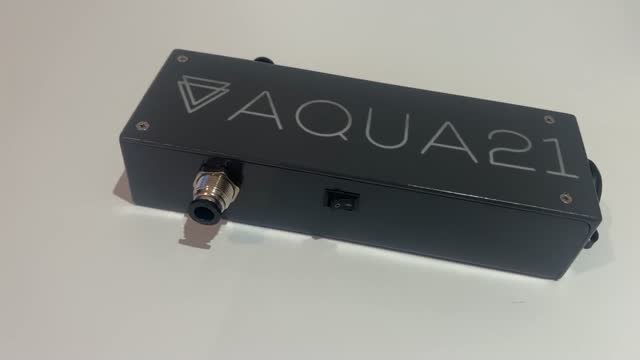
TRL 5
It's tested in conditions close to real use.
View project →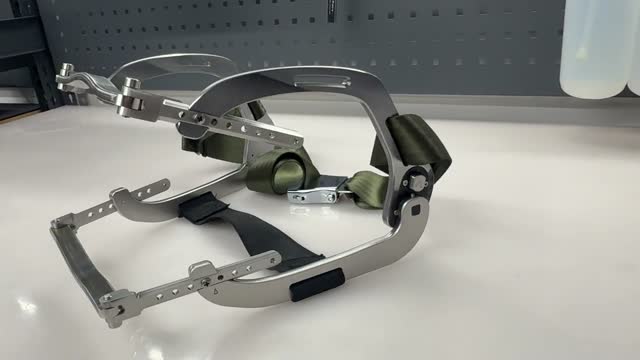
TRL 6
A near-final prototype is demonstrated working in realistic conditions.
View project →05 / Our process
TRL 1–4 · MRL 1–3
TRL 4–5 · MRL 3–4
TRL 5–6 · MRL 4–6
TRL 6–8 · MRL 6–8
TRL definitions follow the European Commission’s Horizon 2020 scale; MRL definitions follow the US Department of Defense Manufacturing Readiness Level Deskbook. Plain-English descriptions are our own summaries.
Next step
We commit to a working function, not just a design or a render. Tell us what it needs to do.
Start a project →